
To bring in more transparency, the Maharashtra government will launch e-payment gateways for stamp duty and registration charges.

This makes it the most valued fintech company in the country after Paytm and Walmart-owned PhonePe.

Modi said Ramakrishna Paramhansa was one saint who had a clear vision of her and his disciple Swami Vivekananda had also felt the spiritual vision about the goddess, which infused into him extraordinary energy and strength.

An initiative of Nandan Nilekani's EkStep Foundation, people+ai on Tuesday unveiled its vision for the future of Artificial Intelligence (AI) in India, dubbed 'Adbhut India' (Amazing India). It aims to harness AI as a powerful tool to enhance the lives of all Indians. The event marked the rollout of several initiatives by people+ai that are focused on discovering, demonstrating, and disseminating population-scale AI use cases for India.

The Supreme Court on Wednesday issued pan-India guidelines on demolition of properties and said affected people need to be given some time to challenge demolition orders before an appropriate forum.

A senior finance ministry source said making the use of debit cards and e-wallets compulsory across the board is legally untenable, but banks have been asked to insist their account holders use these instruments

Amazon CEO Jeff Bezos is in India this week and is expected to meet top government functionaries, business leaders and SMBs.

Facebook-owned messaging service WhatsApp has secured regulatory approval for launching its digital payment platform -- WhatApp Pay -- in a phased manner, close to two years after the US-based company's pilot run.

We are certainly for digitisation. I do not have opinion about demonetisation. I still don't, says Bill Gates.

Flipkart Group on Monday said it has raised $3.6 billion (about Rs 26,805.6 crore) in funding led by GIC, Canada Pension Plan Investment Board (CPP Investments), SoftBank Vision Fund 2 and Walmart, valuing the e-commerce giant at $37.6 billion. The company, which competes with Amazon, Reliance Industries' JioMart and others in the burgeoning Indian e-commerce market, said it will continue to make deeper investments across people, technology, supply chain and infrastructure to address the requirements of a rapidly growing consumer base in the country. The current funding round has also seen participation from sovereign funds DisruptAD, Qatar Investment Authority, Khazanah Nasional Berhad as well as marquee investors Tencent, Willoughby Capital, Antara Capital, Franklin Templeton and Tiger Global.

The coronavirus pandemic has changed how businesses look at payments. Earlier, fintech companies said when they were talking to merchants, they were not interested in digitisation.
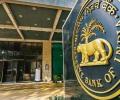
In a bid to ensure security of card data, the Reserve Bank of India (RBI) has enhanced the scope of tokenisation and permitted card issuers to act as token service providers (TSP). Under tokenisation services, a unique alternate code is generated to facilitate transactions through cards. The RBI on Tuesday extended the device-based tokenisation to card-on-file tokenisation (CoFT) services, a move that will bar the merchants from storing actual card data. Card-on-file refers to card information stored by payment gateway and merchants to process future transactions.

Start-ups such as Max Wholesale, Jumbotail and ShopKirana are helping them place orders, maintain inventory, optimise delivery routes and make payments, all digitally.

Rajeev Chandrasekhar discusses five issues pivotal for the success of Digital India

Infosys Ltd on Thursday reported a 4.7 per cent rise in the September quarter net profit and raised revenue guidance after broadbased growth. Net profit of Rs 6,506 crore in July-September was up 4.7 per cent when compared to Rs 6,212 crore earnings in the same period last year. It was 2.2 per cent higher quarter-on-year, according to a company statement.

With the arrival of new players such as Amazon Pay, Google Tez and Flipkart's PhonePe, digital money companies are now changing their business pitch.
Prime Minister Narendra Modi will on Friday launch two schemes of the Reserve Bank of India (RBI) that may go a long way in changing how the household sector invests, and complains if anything goes wrong with their savings. These schemes - retail direct and an integrated ombudsman - will be launched by the Prime Minister virtually, in the presence of Finance Minister Nirmala Sitharaman. With the introduction of retail direct, a common man can directly take a position in government securities (G-Sec), considered to be the safest asset class a sovereign can offer.

Data processing compliance is the main reason behind the delay. The government, on several occasions, has made it clear that Indian financial data needs to be stored exclusively onshore and if it is processed outside, it needs to be brought back in 24 hours.

Ashok Vaswani, a banker with more than three-and-half decades experience in building and scaling up businesses across consumer and corporate banking and payments, will be the next managing director (MD) and chief executive officer (CEO) of Kotak Mahindra Bank. Last week, the Reserve Bank of India (RBI) had given its approval to Vaswani's appointment. Vaswani is currently President of Pagaya Technologies, a US-Israeli artificial intelligence (AI) fintech firm, which he joined in June 2022.

Ask rediffGURU and tax expert Mihir Tanna your income tax-related questions.

According to the Reserve Bank of India's data, cash still accounts for 90 per cent of all monetary transactions in India.
While some are relatively new in this business, Vodafone, which has 1.8 million touch points in the country, has been offering basic banking and payment services through its pre-paid mobile digital semi-closed wallet called M-Pesa since 2012.

The Supreme Court in a 4:1 majority verdict upheld the government's 2016 decision to demonetise Rs 1,000 and Rs 500 denomination notes, saying the decision-making process was not flawed.

The company will transfer its wallet business, which has over 218 million mobile wallet users, to the newly incorporated entity -- PPBL -- under the payments bank licence awarded to Vijay Shekhar Sharma, the founder of One97 Communications that owns Paytm.

A large number of people using cards at PoS Cards being used more frequently Small-ticket transactions Mastercard South Asia head Porush Singh calls these the three key trends for a cashless future. And post-demonetization India, he believes, is steadily moving towards it.

The jury is still out on the decision to demonetise high value currency notes on November 8, 2016, with the government claiming it has helped greater formalisation of the economy while critics saying it has failed to curb black money and reduce dependence on cash. On November 8, six years ago, Prime Minister Narendra Modi had announced the demonetisation of old Rs 1,000 and Rs 500 banknotes and one of the key objectives of the unprecedented decision was to promote digital payments and curb black money, besides eliminating terror funding. As per a Reserve Bank data, currency with the public has jumped to a new high of Rs 30.88 lakh crore an October 21, indicating that cash usage is still substantial even six years after the demonetisation move.

The verdict in the Google versus Epic Games antitrust case in the US has spread cheer among the Indian gaming and app developers. Ending a three-year legal battle, the San Francisco jury found that Google turned its Play app store and billing service into an illegal monopoly. American video game maker Epic Games, best known for Fortnite, had sued Google in 2020.

'A mule operates someone else's account to transfer illegal money.'

'Just the amount of work which is there just to become more and more successful in banking. For this to happen you need to have leaders who understand technology.'

He said Congress would push Madhya Pradesh back into the BIMARU (laggard) category if given an opportunity again.

In January, Visa's chief executive officer, Al Kelly, said during an earnings call that "there's been a burst of the balloon in valuations in the fintech world". Noting that the trend of lower valuations "is a helpful characteristic of the current environment", he added: "We will look for capabilities and management teams that will bring more value to Visa than we can bring ourselves." Data from KPMG's Pulse of Fintech H2'22 shows that global fintech investment - via mergers and acquisitions (M&As), private equity (PE) and venture capital (VC) firms - at $164.1 billion in 2022, was down 31 per cent over the year before. Indian fintechs held up better during this timeframe, attracting $6 billion, or a fall of 24 per cent.

Balance-level delinquencies in the credit card segment saw a 17 basis points (bps) year-on-year (Y-o-Y) rise in the quarter ending June 2024 (Q1FY25). In all other credit segments, including personal loans, delinquencies declined even as retail credit growth moderated, consequent to banks tightening the supply of credit to the unsecured segments, a report by TransUnion CIBIL said on Monday. Data shows that balance-level delinquencies, measured in terms of 90 days or more past due, in the credit card segment stood at 1.8 per cent in Q1FY25- highest among all other credit segments.

'In the long run, I don't foresee major ramifications [about Trudeau's allegations].' 'There's just enough hypocrisy among Western nations for India to douse the outrage.'

Taking a strong view of Google pulling out some apps from its Play Store, the government on Saturday said delisting of Indian apps cannot be permitted and that the tech company and the startups concerned have been called for a meeting next week. In an interview to PTI, IT and Telecom Minister Ashwini Vaishnaw said the startup ecosystem is key to the Indian economy and their fate cannot be left to any big tech to decide. The minister's comments assume significance as Google on Friday began removing some apps, including popular matrimony apps, from its Play Store in India over a dispute on service fee payments, even as apps and well-known startup founders cried foul.

While the acceptance of cards, mobile wallets and banking apps is increasing, only 10 per cent of transactions take place through them.

The prime minister initiated the discussion on the move, which was announced last month, with the ministers after the meeting of the Union Cabinet ended in New Delhi.

Friday will be a landmark day for domestic markets, with all the listed stocks entering the professed T+1 (trading plus one day) settlement cycle. About 200 stocks, which account for more than 80 per cent of India's market capitalisation, will be settled on a next-day basis, with effect from January 27. This will evidently complete the transition to the T+1 cycle that started in February 2022 with the bottom 500 stocks in terms of market value.

Appropriate policies will increase connectivity much more than spectrum auctions, says Shyam Ponappa.

... And what explains the directions of change? asks Ajit Balakrishnan.
The interim report highlights key competition issues in the e-commerce space like deep discounting, the imposition of unfair terms and conditions, the growing dependence of brick and mortar establishments on online platforms, and opaqueness in search rankings.
